Kultur Reiseblogs in Italien

Jeder Aufenthalt fühlt sich wie zu Hause an

Planen Sie Ihr nächstes Abenteuer mit fachkundigen Reiseführern, Reiserouten und sehenswerten Zielen in ganz Europa!

Portofino Travel Guide: the Perfect Italian Summer Experience

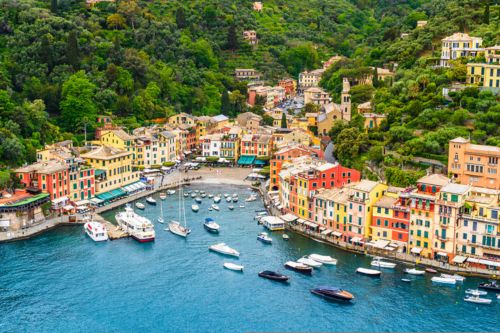
Hidden by mountains and surrounded by the turquoise waters of the Mediterranean, Portofino presents a natural Italian beauty like no other. The little Italian village has become so popular and loved worldwide that it is not uncommon to see celebrities like Jennifer Lopez and Micheal Douglas walking down its charming, cobbled streets and just enjoying the perfect Italian summer. Though small in size, there is plenty to do and experience in a day or even a weekend in Portofino. From its stunning harbour lined with million-euro yachts to hilltop castles with panoramic views and medieval seafront abbeys, this is the only Portofino itinerary you will ever need to create the most memorable holiday in Italy! The stunning Portofino port surrounded by colourful buildings Start the day by strolling around La Piazzetta  The heart of the village, the place where everything happens, La Piazzetta is the main square of Portofino. You can find some of the best dining experiences here for a taste of true Ligurian cuisine: From elegant waterfront dining at the famous La Terrazza to family-run trattorias like Trattoria Tripoli with in-house wines.  The village also has exclusive Michelin-star restaurants like the seafront DaV Mare if you are willing to pay a bit more than usual for top-class gourmet meals. However, for a more budget-friendly and immersive experience, try one of the cooking classes in Portofino where they will teach how to make an authentic Focaccia alla Genovese or Trofie al Pesto, a typical pasta from the area. La Piazzetta is also a convenient spot for browsing the high-end local boutiques and international brands like Louis Vuitton and Ferragamo! Editor’s tip: Take a quick tour of the 11-C Chiesa di San Martino in La Piazzetta before exploring other parts of Portofino. The entry is free, and the nave of the church is absolutely gorgeous. The frescoed nave of the 11th Century Church of Saint Martin (Divo Martino) in Portofino, ItalyClose to La Piazzetta are also the best things to see in Portofino! Just a 5-minute walk away is Museo del Parco with Italian-style gardens and some fine examples of the Genovese architecture. If you move a bit further in the direction of the Portofino Marina, it's the imposing Castello Brown you’ll be greeted with. A short hike up the hill and you will reach this well-preserved fortification that has stood in Portofino since the Roman times. Castello Brown also has one of the most expansive views of Portofino that spans the hilltop, the village and azure bay! A lovely aerial view in a sunny summer day in Portofino from Castello Brown Another place to soak up unreal views is the Lighthouse of Portofino. Perched at the cliff end of the promontory, the views here are truly breathtaking. And since you need to hike to get to the lighthouse, the small bar there serving drinks completes an overall rewarding experience! The lighthouse of Portofino at the cliff end of the promontory Cool down at the Baia Cannone There are actually two places where the clear waters of the sea tempt you to take a dip and enjoy the Mediterranean. The first is Baia Cannone, which is less than a 10-minute walk from La Piazzetta. It is the perfect spot to get away from the main square buzz for a bit and just enjoy nature. The turquoise waters of Baia Cannone in Portofino Editor’s tip: This is the perfect place to decide: Where to stay in Portofino? If you wish to stay close to Baia Cannone, then this sea-view apartment might be ideal but if you want to stay smack dab in the middle of the village, then this Piazzetta Martiri stay is better. The charming San Fruttuoso Bay with the Abbey and the beach Anyway, the other spot to enjoy swimming waters is at the Abbey de San Fruttuoso, one of the main highlights of Portofino. The abbey presents a picture-postcard kind of beauty, but it can be reached only on foot or by boat.  Two routes lead to the Abbey. Find the best hiking route for you here. There is also a little surprise here that many don’t skip while visiting Portofino...  The underwater statue of Christ of the Abyss in the Bay of San Fruttuoso. Originally placed in the medieval abbey itself, the bronze statue is now immersed in the clear waters and can be admired through snorkelling, diving, kayaking or a glass-floor boat tour. Gift yourself an amazing experience to admire the underwater statue of Christ of the Abyss Is it possible to have a budget-friendly holiday in Portofino? Since the holiday destination caters to a jet-setting crowd, it has become one of the most expensive holiday hot spots. Staying in budget-friendly accommodations in close by destinations is ideal if you do not want to shell out a lot of money.   Plus, considering its small size, driving around in high season with limited parking space could be very tricky. Portofino’s has easy access from alternative destinations like Santa Margherita di Ligure, Cinque Terre and Genoa, making it worth it for all travellers. Here is how you can get to Portofino from each of these destinations Santa Margherita to Portofino Home of the beautiful Villa Durazzo and the only sandy beach on the Italian Riviera, Baia Paraggi, Santa Margherita di Ligure is the closest option to stay in for visiting Portofino. From the village, it is just a 20-minute bus ride or an hour-long hike (if you love hiking, then do not miss out on the opportunity to savour one of the most beautiful routes around). Take bus 782, which runs every 20 minutes, and it will drop you off right in the centre of Portofino. A ferry service, which runs from March to October (starting from 6€), also goes from here; it is the perfect way to treat your eyes with one of the most gasp-worthy views of the Portofino harbour.  Stay in Santa Magherita Ligure. Genova to Portofino The capital of the Ligurian region, Genova, is a great alternative to enjoy the city vibes and easy access to Portofino.  From Genova, it is approximately a 45-minute drive to Portofino, or you can take public transport. The regular FS 12337 train goes to Santa Margherita and from there the usual 782 will take you to your destination. The old harbour (Porto Antico) is the ancient part of the port of Genoa. In 1982 was redeveloped as area for public access restoring the historical buildings Editor’s tip: Do not miss out on one of the largest aquariums in Europe in Genova, with manta rays, whale sharks, seals and more. Stay in Genova centre. FAQs How much time do you need in Portofino? Ideally a day. But it also depends on how much you want to explore. If you plan on taking cooking classes or hiking in the Portofino Nature Park, then 2-3 days or a weekend is perfect. Is Cinque Terre or Portofino better? There is no choice when it comes to either. Rather, Portofino is a good addition to your Cinque Terre itinerary, especially if you are hiking the five beautiful villages. Is Portofino worth visiting? Portofino is one of those destinations that you should visit at least once in a lifetime. It blends everything Italian in the most scrumptious manner. From iconic Italian luxury to ancient charm, clear waters and lush nature. So, what will you choose: A day trip or a weekend in Portofino? You will find accommodation for all price ranges in Liguria, from low-budget to high-end retreats! 

Our Most Romantic Getaways for a couple's vacation

With the day of love around the corner, celebrating it with your special one is a must. But if like us you too feel that love should be celebrated every day, then these romantic retreats will back up your every romantic holiday plan. From luxe Jacuzzi getaways to beachfront fun and city escapes, our latest selection of the most romantic couple-friendly homes is perfect for packing your bags and lolling off with "the one".  Whether you are looking to reconnect with your partner, thinking of an adventurous couple's weekend or planning your Valentine's Day escape, these year-round romantic nooks offer you some of the best escapes. (Use the discount code HRLOVE to get a special 10% discount on bookings from 13th to 17th February 2025 to celebrate St. Valentine's!)A luxury retreat in Campania to pamper each other Enjoy cosy moments in the hot tub in this lovely retreat In the coastal town of Agropoli, the pearl of Campania, this Jacuzzi retreat in lush greenery welcomes you to indulge in the vibrance of the Mediterranean atmosphere and share intimate moments surrounded by everything that feels like love.With antique charm and modern comforts, the vacation rental offers time off from mundane life and more time for each other. Bask in the sun-drenched private garden, with sun beds, a jacuzzi and your favourite drink, or delight in the host’s special breakfast whipped up with homemade ingredients. If you feel like it, then there is a fabulous option for guests to host exclusive garden parties; but if couple-friendly explorations are more your thing then the historic Agropoli Castle, pristine beaches (The Bay Trentova and Spiagge di Agropoli), and the nearby treasures of Paestum Archaeological Park are located within a couple of minutes from here. Book this romantic retreat! A secluded cottage, fabulous outdoors and perfect moments in Croatia’s countryside  Set your romantic dinner in this property’s gazebo Less than an hour from Zagreb, the serenity of the countryside and this enchanting romantic cottage offer quick, year-round getaways for city dwellers and nature lovers. This stylish retreat seamlessly blends traditional and contemporary features for couples of all ages. Enjoy sunny moments on the terrace, cosy up with the wood-burning stove, or relax in the hot tub amid the curated garden. With a master bedroom, a convertible sofa, and a well-equipped kitchen, this haven ensures comfort. Moreover, after some indulgence at the property, guests can easily explore the historic Varazdin in just 15 minutes, savour the local cuisine, or simply unwind in the idyllic surroundings.  Book your romantic escape! Winery Weekend, Wellness and Self-Care in Dolejska Wine Region  A romantic retreat in a picture-perfect wooden cottage, surrounded by vineyards Conveniently located between Ljubljana and Zagreb, this picture-perfect retreat promises an unforgettable holiday for couples.Slow down at this romantic escape where traditional and contemporary design come together to give you a slice of Slovenian paradise. Relax in the unique Finnish sauna, dine on the wooden deck with breathtaking views, unwind in the wooden hot tub with a glass of local wine, or retreat to the hay loft for rustic relaxation. Additionally, the owners' wine cellar beckons for local tastings and curated experiences including wellness treatments. And there is plenty to do nearby as the enchanting town of Otočec, with the only Gothic water castle in Slovenia on a river island, is just 10 minutes away and many thermal baths of Slovenia are within easy reach.  Book this cosy cottage! Get swept off your feet at with this central city escape on Ljubljanica’s banks Plan your next city escape in this spacious apartment in Ljubljana Home to historic architecture and the living Ljubljana Castle, the capital of Slovenia might not be the first place that pops up when one thinks about romantic getaways. But with Ljubljana’s Luv Fest and this charming riverside apartment, the city might just spell the perfect Valentine’s for you!Perfect for up to 4 guests, the air-conditioned retreat is a year-round haven. Unwind in the naturally bright living room or relax in the private open-air coffee corner. Fully equipped for a carefree stay, the apartment is ideal for exploring Ljubljana's architectural wonders, dining in charming restaurants, and wandering the historic Old Town—all within walking distance. Whether winter or summer, this central location is your gateway to Slovenia's diverse beauty. PS. Bikes are also available for guests if you want to discover hidden spots of the city cycling slo-mo with your love. Book your next city trip! A haven of tranquillity, this romantic mountain retreat is where skiing is still in spring till April Enjoy the view of the mountains from this balcony Nothing says it's time to cosy up with your special one better than a holiday in the winter wonderlands.This holiday retreat in Claviere, one of the six Via Lattea resorts, is the ideal nest to escape to alpine serenity. Perfect for honeymooners and pet lovers, the private terrace with mountain views features wooden interiors and an alpine living experience. Plus, with proximity to skiing spots and ski storage, this apartment is also the ideal ski-in/ski-out vacation rental. The snow-sure slopes of Via Lattea bring skiing vibes well into April and with 6 resorts to choose from, there is a wealth of experiences to enjoy. Explore nearby attractions, from the Church of San Maurizio to thrilling ski resorts like Sauze d’Oulx and the French resort Montgenevre, making memories that last a lifetime.  Book one of these mountain havens! Waterside rental with a private beach on Kolpa RiverEnjoy the peace of River Kolpa in our waterside house A picturesque, romantic cottage in a serene hamlet between the lush forest and the enchanting River Kolpa means that nature has come together in harmony to give you the best of its beauty and gifts.With a private beach just steps away, this delightfully cosy wooden haven is pure indulgence surrounded by nature. Let loose in the outdoor Finnish sauna, stone terrace, BBQ facilities and balcony overlooking the river. Explore the unspoiled beauty of Slovenia's southern border, by hiking, cycling, fishing, SUP and exploring the river with canoe rental available at every step. Plus, with Petrina just 5 minutes away, this retreat is all about tranquillity with a dose of adventure. Book your private beach rental! Enjoy Katakolon’s alluring water at this beach Retreat in GreeceRelax by the sea in this perfect romantic beach getaway!  Unwind, explore, and create cherished memories with your special one at this beachfront haven in Katakolon just a stone’s throw from various cafes, bars, beach bars, and a barbecue restaurant. Located right on the sands of Agios Ilias beach, this sun-soaked escapes feature a spacious balcony with a sea view, perfect for dining to the soothing sound of the waves. Fully air-conditioned and equipped with Wi-Fi, it feels like a home away from home but with the magic of Greece and an incredibly charming location with direct beach access and water sports like SUP boarding and swimming. The well-furnished living area and open kitchen provide all you need for a carefree self-catering stay.  Book these sun-soaked escapes! A Romantic Villa that doubles as a spa retreat, the go-to honeymoon hideaway Book the weekend in this romantic villa for you and your loved one With a utopic location in the small Italian town of Alviano, the holiday villa offers a whole package for travel lovers and honeymooners. The town is home to not only historic structures like Rocca di Alviano but also to one of the biggest natural reserves in the area, the Alviano Oasis with more than 190 bird species and 7 kilometres of forested paths for delicious walks and wanderings.  Explore the area and come back to fabulous amenities like a private swimming pool for a dip or the sauna to relax your nerves. Depending on the weather, curl up in front of the fireplace with your loved one or plan a sweet little picnic in the exclusive garden equipped with open-air dining and BBQ. Book your stay in this romantic villa! A soul-soothing Mountain Cabin abound in Hungarian nature and a Michelin-star dining experience  Admire the view amid nature and sunshine Embark on a journey to the natural bounty of Southern Hungary, where the East Mecsek landscape protection district unfolds at the foot of Zengő mountain.  The sustainable cozy cabins overlooking the picturesque Hármashegy offer a close-to-nature retreat, embodying tranquillity and relaxation. Resembling a herd grazing on the hillside, the cabins prioritise eco-friendly practices, from LED lights to selective rubbish collection. Experience comfort with a sauna, indulge in a breakfast basket or explore nearby dining options like Hosszútányér, a Michelin-starred restaurant, just minutes away on foot. Discover the cultural richness of Pécs known for its European Capital of Culture heritage. For sports enthusiasts, Central Wakeboard Park is a short drive, and Lake Pécs awaits water lovers. Book your retreat amid nature! A luxe experience in nature to round up a truly relaxing Valentine’s  For nature lovers, Treehouse with a Jacuzzi and BBQ in the middle of the Slovenian woods Hidden in southern Croatia, this scrumptious treehouse escape promises a tranquil day or days of love surrounded by mountains, rivers, and lush forests.Just 30 minutes from the famed Adriatic coast with its golden beaches, and an hour from the historic city of Zadar, guests can immerse themselves in 3000 years of history, vibrant markets, and a captivating coastal landscape, and at the same time, enjoy a delightful experience in the peace of nature and a balcony for enchanting treetop dining. Its well-equipped kitchen heated shared pool, outdoor jacuzzi, and covered BBQ area ensure a perfect blend of relaxation and adventure. Zadar International Airport is conveniently located just 50 minutes away, making this treehouse a gateway to an unforgettable Croatian holiday. Book your getaway in nature! Whether it is a ski resort, a beach destination, cities in love or the most untouched corners of Earth’s paradise that you are looking for? Book your time away with your loved one now! 

The most beautiful villages in Umbria worth visiting

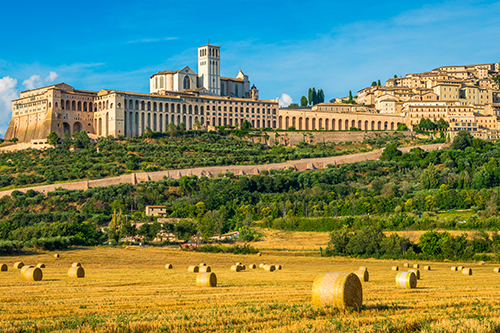
Embarking on a journey through the heart of Italy unveils a tapestry of enchanting villages, each with its unique charm and timeless allure. In the picturesque region of Umbria, where medieval streets wind through rolling hills and historic architecture stand as a testament to centuries past, the quest for the most beautiful villages becomes a captivating odyssey.  Below, we have found the hidden gems, the quaint corners, and the cultural treasures that define the most enchanting villages to visit in Umbria! 1. AssisiAn idyllic view of the hilltop village of Assisi East of Perugia lies the hilltop town of Assisi, the birthplace of Saint Francis, the patron saint of animals and the environment. Its must-see Basilica di San Francesco, constructed between 1228 and 1253, is a significant Christian pilgrimage site. Assisi also has the well-preserved Roman Temple of Minerva from the 1st century for those who’d like to venture into ancient times! Not only that, this UNESCO World Heritage site with stunning medieval architecture, narrow streets, and panoramic views is also quite the charmer for nature lovers with the nearby Mount Subasio Regional Park serving as a beautiful retreat.  2. PerugiaThe beautiful Piazza IV Novembre of Perugia The regional capital, Perugia, with its historical sites, medieval alleys, and vibrant cultural scene lures into a rich history dating back to Etruscan times. Explore impressive Renaissance architecture in its piazzas, discover intriguing medieval lanes, and uncover Etruscan ruins beneath the cathedral. July brings the vibrant Jazz Festival, filling the streets with music, meanwhile, the Perugina chocolate factory, producer of delicious Baci chocolates, is a year-round favourite of tourists. Ideally, you should allow at least three days to fully enjoy the city! 3. Orvieto The iconic duomo of Orvieto on a crisp, sunny day Known for its impressive Duomo (Cathedral) and well-preserved medieval centre, Orvieto sits atop a volcanic cliff and offers breathtaking views of the surrounding countryside. Book a tour of Orvieto Underground to discover the fascinating history of kilometres of tunnels beneath the city. Alternatively, visit the impressive cathedral, marvel at the Pozzo della Cava, a 36-meter-deep Etruscan well, and descend the 248 steps of the Pozzo di San Patrizio, a 54-meter-deep well.  Easily accessible by train from Rome in one hour or by car with ample parking, Orvieto can be explored in a day, but two days allow for a more relaxed experience. Also, don't miss a fantastic pizza at Piazza del Popolo. 4.  Spello An atmospheric alley of Spello to spend your afternoon A charming hilltop town with medieval streets adorned with flowers, Spello is often considered one of the most picturesque places in Umbria with diverse experiences that pique curiosity. In Spello, wander through its floral alleyways, admire its churches, and enjoy stunning Umbrian vistas. Art enthusiasts shouldn't miss the Baglioni Chapel in the Collegiata di Santa Maria Maggiore and the Infloriata festival in June that transforms streets into floral carpets. The town also offers excellent restaurants like La Cantina di Spello, showcasing local delicacies such as black truffles, olive oils, Chianina beef, and wild boar. Editor’s tip: Make Spello the base for your Umbrian trip as it is easily accessible by train! 5. Gubbio  An alluring view of the historic buildings of Gubbio As one of Umbria's oldest medieval settlements, Gubbio has preserved its original appearance and is known for its historic centre, the Palazzo dei Consoli and the annual Corsa dei Ceri festival. The town is quietly surrounded by countryside and ancient woodland, with the Piazza Grande offering stunning views of the valley and showcasing historic buildings like Palazzo dei Consoli and Palazzo Pretorio, as well as the Duomo and the Church of San Francesco. Gubbio is also known for hosting the world's largest Christmas tree during the holidays!  Gubbio is perfect for a day trip accessible by car, train, or bus from Perugia and Rome. Editor’s tip: Indulge in Umbrian cuisine, including legume soup and strangozzi with meat sauce. 6. MontefalcoThe autumn-like beauty of the Mantefalco Sagrantino Vineyards Considered the “Balcony of Umbria”, Montefalco is surrounded by vineyards and is renowned for its wines such as Sagrantino di Montefalco and Montefalco Rosso, as well as panoramic views of the Umbrian countryside between Perugia and Spoleto. The well-preserved medieval center with ancient walls and towers includes highlights like the circular Piazza del Comune with key buildings like Palazzo Comunale, Teatro Comunale, and Oratorio di Santa Maria di Platea. The Church-Museum of San Francesco houses a significant fresco cycle by Benozzo Gozzoli, while other attractions include medieval walls, Sant'Agostino gate, churches, and the Castle of Fabbri with an archaeological crypt! 7.  TodiMarvel at the octagonal architectural expertise of Tempio di Santa Maria della Consolazione Todi's well-preserved medieval centre leads you into a world of typical architectural structures like the Piazza del Popolo and the Tempio di Santa Maria della Consolazione. Perched on a hilltop above the River Tiber, Todi is by visitors for its authentic charm and limited tourist impact where you can experience genuine Umbrian life and savour earthy flavours like a slow-cooked pigeon with a delightful dry white wine. Todi also serves as an ideal base to explore neighbouring Umbrian gems, with Montefalco and Perugia, which are just a short drive away. 8. Bevagna Feel the olden days come alive at Mercato dei Consoli A small medieval town known for its virtually intact Roman and medieval architecture, Bevagna is the perfect stop for reliving the old times. The town is home to the former church of Madonna delle Neve, ancient thermal baths, Piazza Silvestri, Palazzo dei Consoli, and churches like San Silvestro and San Michele Arcangelo. It also plays host to the Mercato delle Gaite, a historical reenactment festival recreating medieval village life every June. To top it all Bevagna has a well-preserved historical center with charming alleyways attracting visitors since the Grand Tour era.  9. Città di CastelloThe grandiose cathedral of Città di Castello Located in the northern part of Umbria, Città di Castello, a medieval gem on the Tiber, has a mix of Renaissance and medieval architecture, including the Palazzo Comunale and the Cathedral of San Florido. Its historic core is made up of cobbled streets and hidden churches, and features the Palazzo Vitelli alla Cannoniera, a 16th-century palace turned art gallery, showcasing exceptional works by Renaissance artists like Raphael and Luca Signorelli! 10.  Castiglione del Lago The brilliant blue waters of Lake Trasimeno visible from Castiglione del Lago Nestled on the shores of Lake Trasimeno where Umbria meets Tuscany, Castiglione del Lago is famed for its 13th-century Castello del Leone offering stunning views. The town is also ideal for exploring several other water's-edge villages and tranquil islands, notably Isola Polvese with its historic Church of San Guiliano and the beautiful Garden of Aquatic Plants. Every spring, the Coloriamo i Cieli Festival transforms the skies with colourful kites and hot-air balloons above Castiglione del Lago.  Want to start making plans for your travels through the "Green Heart of Italy" ? Book your tranquil Umbrian retreat here! Before you go… More information and FAQs to make your travel easier around Umbria! Is it worth going to Umbria? Despite its relatively small size, the region offers a wealth of exploration opportunities including some top spots from our list such as Assisi, Orvieto, Lake Trasimeno, Montefalco area and Monte Subasio Regional Park. Plus, Umbria’s location in Central Italy, approximately midway between Rome and Florence, makes it quite an accessible destination even from Tuscany. From Rome, it’s about a 2-hour drive north whilst it’s a much longer 5-hour drive south from Milan. Florence to Perugia is likewise around a 2-hour drive, trains are also available.  Which is better, Umbria or Tuscany? Tuscany is renowned for its iconic city centres, while Umbria offers a more immersive Italian experience. Although Tuscany has better-known small towns, Umbria provides ample opportunities to escape crowds in the region often referred to as Italy's "green heart." The less-discovered charm of Umbria makes it an ideal destination for those seeking a more tranquil and authentic Italian experience. How many days do you need in Umbria? Umbria's compact size makes it an ideal destination for a long weekend break. In three days, you can explore a couple of the region's beautiful hilltop towns while leaving ample time to indulge in the delicious Umbrian food and wine. However, if you are planning to see more towns and villages, you should consider booking at least one week. Where is the best base to explore Umbria? Perugia is the most convenient city for basing yourself when exploring Umbria. As the capital, largest city, and transportation hub of the region, Perugia provides easy access to trains and buses connecting to other towns in Umbria. The city also offers a variety of accommodation options, including hotels and vacation rental apartments, making it a practical and comfortable choice for your stay in the region.  If you want something more in the countryside, Spello, a stunning hill town in Umbria, is not just a popular day trip destination but also an excellent base for exploring the region. Easily accessible by train, with a short ten-minute walk from the station to the town, it offers a convenient travel option.  If hilltop towns aren't your preference, Bevagna is an excellent alternative. Conveniently located, Bevagna serves as a strategic base for exploring nearby attractions such as Spello, Perugia, Montefalco, and Assisi, especially if you have a car.  How do you get around Umbria without a car? In Umbria, public transportation is limited, with train lines connecting Perugia to popular towns like Assisi and Spello, and local buses covering the rest of the network. For exploring remote villages, especially those not serviced by public transit, having personal transportation like a car is recommended for flexibility. Parking outside medieval towns is necessary, and solo travellers may consider mopeds for day trips, though they are not allowed on highways.  Planning your itinerary is key to navigating public transportation in Umbria. Check the list of towns served by the regional train service and the timetables. Additionally, examine the schedules of regional buses from stations to towns, as well as connections between different towns. With thorough planning, you can make the most of the available transportation options and ensure a smooth and enjoyable journey through the picturesque region of Umbria. The Umbria GO pass offers a convenient solution, providing access to (sub)urban buses, trains, and the Lake Trasimeno ferry, with options for 1 to 30 days. Prices start at €15 and go up to €120. The pass can be purchased at Trenitalia or Busitalia ticket offices, though information on select sales points is primarily in Italian. Buon viaggio! 

Cultural adventures in Europe: 5 surprisingly good destinations

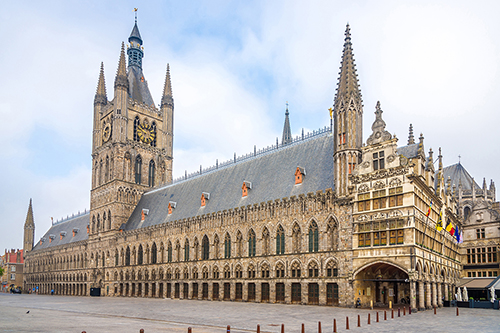
In the age of Instagram, globalisation and rapid travels, over tourism has made the already popular destinations overwhelming to visit and similar in terms of what they have to offer. But there are still some hidden destinations in Europe where there is a chance to slow down, learn about different cultures and gain a fresh perspective of the world: In short, a chance to enjoy a culture trip in Europe and go back to the origins of travelling, which was always to explore and discover the unknown!What to do on a culture trip?●Research the area: A culture trip is a milieu of historical palaces, museums, traditions, folklore, food and more, so a bit of research before going is recommended to make sure what kind of cultural experience you are looking for.●Festivals and Events: Being part of the popular local festivals and events or carnivals is a great way of taking a cultural trip as most of these celebrations revolve around keeping traditions alive. ●Taste the local cuisine: Food is one of the most crucial elements in a cultural trip. A taste of the local cuisine or traditional holiday meals is like getting a taste of how it is to live a normal life in the area.●Immersive Experiences: Immersive experiences allow one to relive cultures that probably do not exist in real life anymore, such as experiencing a pure sense of travel in time with period performances at Predjama Castle or enjoying local culture with vineyard stays in Slovenia.●Home Stays: After food, the best way to experience life like a local as well as the culture is through a homestay. Are there different cultures in Europe? Book a holiday home in Europe and find the answer!Now the list…With unique cultural experiences ranging from the medieval ages to the modern 19th century and up until the Second World War, these destinations are easily some of the well-hidden gems in Europe for a cultural trip!1. Ieper, BelgiumLakenhalle, a stunning example of medieval Gothic Architecture in Ieper, BelgiumWith its iconic Belgian Medieval Gothic Brick Architecture to marvel, Ypres, or Ieper, is home to one of the largest Cloth Hall buildings, the Lakenhalle. Located in the city’s old town centre and declared a UNESCO World Heritage Site in 1999, the Lakenhalle retains its original architecture and is surrounded by the Grokt Market of Ieper. In the market, slow down and sit at one of the open-air cafes to enjoy the placid pace of life accompanied by famous Belgian waffles or beer. Ieper is also a fascinating destination for all curiosos of WWI and WWII. Destroyed completely during the First World War, Ieper, pays homage to all the fallen soldiers at the Menin Gate war memorial. The Menin Gate, which was once the pathway for allied forces to reach the frontline, is a remembrance of the devastation caused by one of the most significant wars in human history. The illumined monument of Menin Gate leading to the old town centre of IeperToday, this 97-year-old memorial holds *The Last Post Ceremony at 20.00 every day to honour all the British and Commonwealth soldiers of the war, with hundreds of spectators showing up every day to witness the moving experience. For those who want to take the journey further into their explorations must also visit the Flanders Field Museum, the British trenches and the memorial to Gurkha and Indian soldiers.The city is close to other beautiful coastal towns with World War history on the West Coast like Nieuwpoort and Oostende. Find holiday homes on the Belgian Coast to soak up art, culture and history.*Please note that the Menin Gate is temporarily under restoration and all of it may not be accessible. However, the Last Post Ceremony will continue to take place as usual. 2. Kotor, Kotor Bay, MontenegroA picturesque aerial view from the old town of KotorNot only one of the least crowded summer holiday destinations, but Kotor is also one of the nicest and most friendly cultural trip contenders. The city, crowned by the lush Dinaric Alps and hugged by the crystal waters of the sea, is ideal for those who love culture as much as nature. Located a couple of hours from another historic city, Dubrovnik, Kotor promises a dive into various cultural intrigues, including food and wine, orthodox churches, hiking trails to fortresses and a charming old town full of, CATS! Alternatively, the town offers many fests and events to actively take part in the culture of Montenegro in February, July and August. Immerse in the traditional folk dance in the old town of Kotor, MontenegroIn February, the traditional festival with celebrations including masking in ancient style is held, while in summer the international arts carnival adds a celebratory vibe to the city in July-August. With over 200 programmes and international artists, the International Festival KotorArt Festival in summer highlights Kotor’s culture and includes various categories like the Klapa Music Festival, Sea Rock Festival and the Kotor Children Festival.For gastronomic explorations, dive into the local Montenegrin cuisine that consists of delicacies like the fish brodetto: a white and blue fish done several ways and served with Swiss Cheese and potatoes, or the roasted octopus, black risotto, clams, and shrimps. Don’t forget to top it all off with the traditional wine Vranac!Stay on Kotor Bay and visit other stunning jewels around like the baroque city of Perast, Budva or Igalo!3. Rogatec, SloveniaA charming example of old-style sun-Pannonian house in the Rogatec Open-air MuseumJust half an hour from the cultural capital of Ptuj is this hidden gem that transports travellers to the good old days. Home to the largest open-air museum in Slovenia, Rogatec has made it to the list for its sheer charm and authenticity. The small town offers a one-of-a-kind immersive experience at the Muzej na Prostenm Rogatec, where life as our ancestors knew it remains alive and available to be experienced with many activities and workshops like “Bread my nana baked”. Another structure reminiscent of Slovenia’s past is the manor house, Duorec Strmol, which also has exhibits and activities to let visitors be part of the day-to-day life of the past.Feel truly like a local at Rogatec with the farmhouse with sauna and explore its surroundings and other hidden Slovenian destinations like Celje.Tip: Experience the cultural richness of Slovenia with other exciting stops like Ljubljana and Bled!4. Sirmione, Lake GardaA captivating aerial view of the Scaligero Castle in SirmioneOne of the biggest lakes in Italy, Lake Garda invites tourists to explore its two-dozen little villages and towns even in the off-season. But amongst them all, Sirmione, located on a peninsula jutting out of the land around the lake, is considered the prettiest. And with good reason. Sirmione’s Scaligero Castle, with its moat, drawbridge and fortified harbour, towers over the tiny Lake Garda village and is its very own cultural icon. The 13th Century Castle is unique for its fortified harbour, the only one in Italy, and has recently come into the public eye for its stunning location and preservation, which happened just 5 years ago! The Castle gives a vast panorama not only of the lake but also of the history of Italy, wherein towns and cities were always up for grabs by powerful families, which in this case was Sirmione.Apart from the imposing castle, the lakeside village’s lovely 15th C Church of Santa Maria Maggiore allows visitors to explore Italian Gothic architecture. Meanwhile cosy squares like Piazza Carducci serve as hub of restaurants to try the typical lake cuisine that consists of dishes with lake fishes as the main hero and some excellent regional wines and everyone’s favourite, the Italian Gelato!The famous Piazza Carducci brimming with café goers on a lovely day in SirmioneSirmione also has efficient ferry services to reach 16 villages on Lake Garda, which includes the famous Riva del Garda and the windsurfing hub Torbole. Discover the famous holiday resorts of Lake Garda with the best holiday homes.5. Lake Balaton, HungaryLive it up with Lake Balaton’s famous white mineral winesCastle, caves, lake and lavender. Lake Balaton is a multi-faceted destination where culture trip enthusiasts would find their thing as much as party lovers would do. From wines and traditional food to immersive castle experiences and hikes on volcanic hills, Lake Balaton is a destination of experiences as varying as exciting.Nicknamed “the nectar of gods” the Hungarian white wine is produced in the Badacsony region, one of the most famous Hungarian Wine regions with volcanic hills and home to the full-bodied mineral white wine and many wineries with tours. For other hedonistic pleasures, visit the village of Kaptalantoki Liliom Village with its traditional Hungarian market and products.The impressive exteriors of the Festetics Mansion in Upper Lake BalatonFor nature seekers who love encountering culture on the way, there are hiking trails that lead to ancient ruins and castles, which have undergone major renovations only in the past few years: like Szigliget; known locally as the Balaton Castle with a Baroque Kitchen, Castle Chapel and weapon exhibition, Sümeg; restored in 2022 and now giving real-life opportunities to soak up Historical Equestrian Games, the Knight’s Big Hall, Castle Tavern, exhibitions and more and the jaw-dropping Festetics Mansion in Keszthely. There are many more things to do at Lake Balaton. Book your holiday home and discover the lake!

Hiking in Liguria: 4 routes to enjoy in or under 4 hours

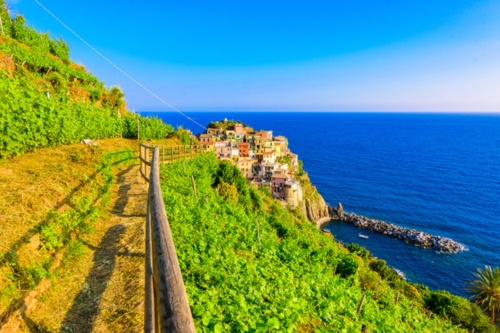
A land immortalised by the likes of Claude Monet, Lord Byron and Dante, Liguria’s stunning beauty and its picturesque location are hardly a secret. The Ligurian region, home to alluring UNESCO sites like Porto Venere and the famous Cinque Terre, is characterised by a dramatic cliffside location, colourful coastal villages and the wide expanse of the Mediterranean Sea, making it a popular tourist attraction in Italy. Therefore, it comes as no surprise that this region is also a great avenue for lovers of hiking and trekking. Aerial view of Cinque Terre’s Vernazza, one of the “Most Beautiful Villages in Italy”  Trekking routes in Liguria generally range from longer treks (between 7-8 hours) to much shorter ones (1.5-4 hours), with varying levels of difficulty, routes and experiences. But all of them wind through Liguria’s history and the beautiful seacoast, almost always around! In our blog, we have rounded up 4 hiking excursions in Liguria that you can complete in or under 4 hours, without compromising on the beauty and versatility of the region! Porto Venere to Riomaggiore - The Gulf of Poets Hike  The stunning Church of S.Pietro in PortovenereAlmost 12 km long, the hiking route on the Gulf of Poets is a challenging one and winds through the beautiful natural park called Cinque Terre Nature Park. The route, also called Sentiero dell’Infinito, begins at Piazza Basteri in Porto Venere, the town adored by the famous English poet, Lord Byron, and ends in the famous Cinque Terre village of Riomaggiore.  Starting from the piazza, the stone staircase leads you to the Doria Castle, the oldest fortification in Liguria which is also the only Genoese architecture left in the region. From there, you also get a glimpse of Palmaria Island, one of the biggest in the Gulf of Spezia, and the sea view accompanies you thereafter.  The next part of the trek goes through Campiglia, from where the hike route once again climbs upwards to Colle Telegrafo (the highest point of the trek). However, after this, the route starts to descend and stretches through the Sanctuary of Nostra Madonna di Montenero before ending in Riomaggiore dotted with cosy cafes, seaside bars and restaurants serving delicious Ligurian Cuisine. Tip: For some breathtaking cliffside aperitifs or meals, the Bar e Vini a Pié de Ma is ideal. Time: 3-4 hours Suitable for: Fit hikers used to hiking routes with climbs The Borgio Verezzi Route in Liguria di Ponente Borgio Verezzi - Valdeminio caves, one of the most coloured caves in the world A route for all ages and seasons; the Borgio Verezzi Route in Liguria will suit hiking beginners. The route starts from Passeggiata Livello Borgio in Borgio Verezzi and crosses areas of multiple architectural and natural beauty before ending in the mythical Valdemino Caves (Caves of Verezzi), which opened to the public just 50 years ago. In between, the route is sprinkled with many interesting spots like the ancient Church of San Martino, Sanctuary of Maria Regina and Mulino Fenicio (a typical old Phoenician mill with blades inside the structure instead of outside as in common windmills). Time: 4-5 hours, depending on your speedSuitable for: All ages and levels of hikers 3. The Abbey of San Fruttuoso di Camogli San Fruttuoso Abbey panorama and beach in Portofino, LiguriaNow turned into a sombre sight with crystal waters washing its shore, the Abbey of San Fruttuoso can only be reached by sea or on foot. The Abbey route has multiple departure points making it suitable for tourists in Portofino, Punta Chiappa, Camogli and San Rocco. The shortest route, however, starts from the village of San Rocco, close to Camogli, and leads through a path of narrow stone divided into two routes: the shorter inland route and the longer sea-view route. The inland route starts at the Church of San Rocco, from a single red circle and meanders through the woods of the Portofino National Park till Gaixella, from where you can walk on the equipped path leading to the abbey. The longer route also starts from the Church of San Rocco but winds along the sea; it starts from the 2 red filled-in circles and is ideal for experienced hikers. After a dip in the water, when relaxation fills the mood, you can easily take a boat back to the charming seaside village of Camogli. It is recommended to check the ferry times from Camogli to San Fruttuoso and back in advance. Time: 2.5 hours (from San Rocco) Suitable for: All levels of hikers depending on the route.  4.  The Sestri Levante Hike in Punta Manara 

Unique Christmas Markets in Europe

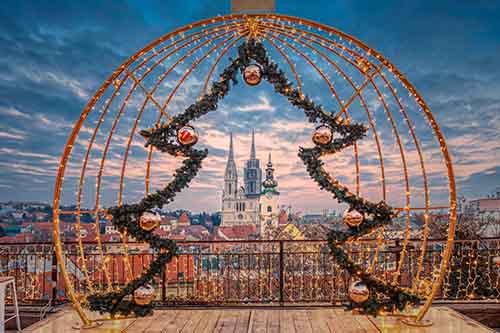
Between Christmas dinners, gifting and carols, there is a much-awaited Christmas tradition that draws thousands of visitors to various gorgeous cities all over Europe. The European Christmas markets are that something special that you find nowhere else in the world during the festive season. With their enchanting combination of wooden chalets, regional food, ice-skating rinks, and unique themes, these Christmas markets make European cities captivating winter destinations for friends, families and travellers looking to soak up some culture on vacations.  Below, we have rounded up some of the most awesome on-the-radar Christmas markets in Europe for the festive edition 2025-2026!  Ljubljana Christmas Market The beautiful reflections of Christmassy facades lighting up the Ljubljanica Ljubljana’s festive programme fills the historical city centre with markets, concerts and free family events. The city runs a broad “Festive December” programme (tree-lighting, organ-grinders and music on Pogačarjev trg, a Castle Festive Fair, a Magical Forest eco-workshop, nativity scenes and special children’s events). Entrance to the festive market areas is free; the Visit Ljubljana event page acts as the official programme hub and will publish the exact 2025 dates and the switch-on schedule when confirmed. Where: Prešeren Square, Kongresni trg, Castle area and embankments along the Ljubljanica.What to expect: Local craft chalets, sustainable/eco-themed workshops, live concerts and nightly light displays.Where to stay: Accommodations in Ljubljana. Zagreb Christmas Market A magical view of the Ban Jelačić Square in Zagreb Zagreb’s award-winning Advent returns in late November with dozens of themed markets around the city — Ban Jelačić Square, Zrinjevac, European Square and the Upper Town. For 2025 the official Advent Zagreb dates are published as 29 November 2025 – 7 January 2026; expect the ice-rink, a Ferris wheel, themed food stalls and a full programme of concerts and children’s events.Where: Ban Jelačić Square (main market) + multiple city squares and promenades.What to expect: Traditional foods (fritule, sarma, grilled sausages), mulled wine, kids’ rides and an ice rink — plus many small neighbourhood markets to explore.Where to stay: Accommodations in Zagreb Bruges Christmas Market (Bruges Winter Glow) The magical Grote Markt in Bruges during Christmas Bruges’ Winter Glow returns with two principal markets in the historic centre — the Markt (Market Square) and Simon Stevinplein — each with a distinct character (traditional gifts on the Markt; short-chain/craft producers at Simon Stevinplein). Opening dates for Winter Glow 2025–26 are 21 November 2025 – 4 January 2026. Opening hours and special late-night hours on weekends and New Year’s Eve are listed on the Visit Bruges site. Where: Grote Markt (Markt) and Simon Stevinplein.What to expect: Waffles, jenever, Glühwein, craft stalls, an ice rink and the new Light Experience Trail as part of Winter Glow.Places to stay: Accommodations near Bruges Merano Christmas Market The mythical Krampus that starts roaming the streets of Merano during Christmas More Austrian than Italian in its vibes, the spa city of Merano has one of the most unique settings.  Merano’s atmospheric market, chalets against mountain scenery and the town’s spa-town vibe will run for the 2025 season from 28 November 2025 to 6 January 2026. The programme includes artisan stalls, regional Südtirol specialities, themed markets (textile, jewellery, ceramics) and events inside Castle Tyrol on selected dates.Where: Kurhaus area, Castle Tyrol, Theatre Puccini and town centre.What to expect: South Tyrol cakes, mulled wine, alpine crafts, Krampus-style parades and smaller specialist markets across town.Where to stay: Accommodations in Merano Lugano Christmas Market, Switzerland Lugano’s enchanting Christmas winter park Lugano’s lakeside Mediterranean charm meets a festive programme: for 2025 the city’s official listings show 27 November 2025 – 6 January 2026 for the Natale/Christmas programme, with market chalets in central piazzas (Piazza della Riforma and other squares), lights in Parco Ciani and family events. Opening hours for Piazza markets are published by the city (times vary by square).Where: Piazza della Riforma (main tree & central stalls), Via Nassa, Piazza Manzoni, Parco Ciani (lights/enchanted forest).What to expect: lakeside strolls between chalets, Italian-Swiss street food, live music and a warm, refined festive atmosphere.Where to stay: Accommodations in LuganoTip: If it is your first time in Lugano, then head to these extremely picturesque locations: Gandria and the prettiest village in Switzerland, Morcote. Chamonix Christmas Market A wintry Christmas atmosphere in Chamonix Chamonix’s valley programme gathers local villages for a series of shows and parades; the Chamonix town market typically appears in the pedestrian centre. The Chamonix event page lists the valley’s Christmas events (crafts, arrival of Father Christmas, workshops). At the time of publication, many Chamonix pages still refer to the previous seasonal dates (example: the 2024 market ran 18 Dec 2024 – 3 Jan 2025). For 2025, the official Chamonix tourism page is the best place to check the valley programme and the town market schedule when organisers confirm the new season’s dates.Where: Place du Triangle de l’Amitié and pedestrianised centre (Avenue Michel Croz, Place Balmat, Quai d’Arve) plus surrounding villages (Les Houches, Servoz, Vallorcine).What to expect: local artisans, Haute-Savoie specialities, Christmas parades, children’s activities and seasonal workshops. Confirm exact 2025 dates on the Chamonix events page.Where to stay: Accommodations in ChamonixOther Christmas Markets worth visiting this holiday season Whether seeking a scenic lakeside stroll or the charm of snow-dusted mountains, these markets offer a magical slice of European Christmas.  Winterland Locarno (Locarno, Switzerland)When: 20 November 2025 – 6 January 2026 Location: Piazza Grande in Locarno Highlights: Ice rink, slide, carousel, Christmas market chalets, concerts and light shows. Check out our blog for more information. Mercatino di Natale di Trento (Trento, Italy)When: 21 November 2025 – 6 January 2026Location: Piazza Fiera and Piazza Cesare Battisti, TrentoHighlights: Around 90 wooden chalets selling craft and local foods, strong eco-friendly/sustainable focus (paper bags, regional foods) Naples Christmas Market / Presepi in Naples (Naples, Italy)When: Approx 1 December 2025 – 6 January 2026 for major fair/market events. Location: Primarily around Via San Gregorio Armeno (famous for nativity-scene artisans) and Piazza Comune / Via San Biagio dei Librai and other streets in central Naples.Highlights: Unique nativity scene (“presepe”) culture with artisan workshops, festive decorations and street markets rather than large chalet villages.Plan your festive getaway with us and experience the magic of Europe’s most enchanting Christmas markets this holiday season!

Vieste and the legend of Pizzomunno

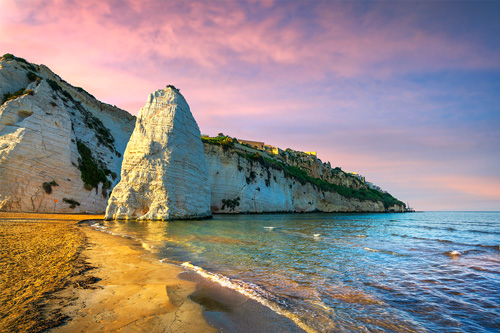
Hanging from the pure-white limestone cliffs, the mediaeval town of Vieste is a beautiful mix of narrow alleys, cobblestone pathways, souvenir shops, and sandy beaches that make it one of the most tranquil summer getaways in Puglia. In fact, the seaside town has lured not only tourists but also a very famous legend – the legend of Pizzomunno – to its scenic shores. It is believed that this ancient legend has given birth to an unusual landform, a giant monolith called Pizzomunno, on the edges of the dazzling Adriatic Sea.So, let’s take you through the romantic legend of Pizzomunno and see why Vieste is totally worth a visit on your trip to Puglia this summer!Standing 87 feet tall under the dramatic skies of Vieste, Pizzomunno is tucked away at the far north end of the 3km-long, golden-sand beach of Castello. Though the natural structure is a memorable sight to see in itself, the legend has given it a charming history that has remained with it for hundreds of years The singular Pizzomunno on the edges of Castello Beach According to the legend, the young fisherman, Pizzomunno, and his lover, the beautiful Cristalda, were attracted to the stunning “end-of-the-world” location of Vieste by the song of a hundred mermaids. As the young couple were stealing some moments together, the mermaids – who had tried hard to seduce the handsome fisherman but failed – became jealous of the great love and loyalty between Pizzomunno and Cristalda.Next thing you know, the mermaids transformed Pizzomunno into a large white stack of stones! Then to make sure that the young lovers were kept apart, the mermaids tied Cristalda’s feet and sent her into the depths of the sea. The legend further continues that Pizzomunno is turned back into his human form every hundred years and disappears from the shore for a single day to meet his beloved Cristalda!But, legend or no legend, Vieste is a really picturesque and romantic holiday getaway on the Gargano Peninsula. In fact, for digital nomads too, Vieste is a great starting point for a laid-back nomadic life in Italy! The stunning promontory of Vieste What can you do in Vieste?With the calm, blue flag waters of the Adriatic lapping the shores, Vieste’s beaches and sea are perfect for enjoying water sports and swimming. In the town itself, an essential experience is wandering around the charming alleyways of Vieste’s old town centre.You can carry on your little tour from the old town centre of Vieste to its breathtaking promontory with white-washed houses and some extraordinarily romantic sunsets. From the promontory, you can head to the nearby Norman Castle and catch a panorama of the striking white of Pizzamunno and the gorgeous deep blue of the Adriatic Sea.Another must-do when in Vieste is boat tours! Transporting you to impressive hidden caves, coves and natural formations, the boat tours from Vieste are an excellent way to soak up the picture-perfect beauty of the Gargano Peninsula.Tip: To enrich your travels with something truly Puglian, a visit to the capital of Trulli, Alberobello is a must.Vieste’s excellent location in the magnificent Gargano Park also makes it possible to enjoy extraordinary excursions in the magical mediaeval woodland of Foresta Umbra in just 30 minutes! The enchanting beauty of Umbra ForestMoreover, Vico del Gargano (the village of love) and the sandier beaches of Peschici are also within a 40-minute drive from Vieste. But if you are with your family for a long summer break, then an extraordinary date with history in the natural cave churches of Gravina di Puglia is unmissable. Also unmissable is a visit to the other pearl of the Adriatic, Polignano a Mare, which has more than 70 sea caves and year-round crystal-clear waters to enjoy!Inspired to take a trip down to the charming seaside town of Vieste? Book a stay in any of our carefree holiday homes in Puglia.

European Easter Traditions Worth Planning a Family Holiday!

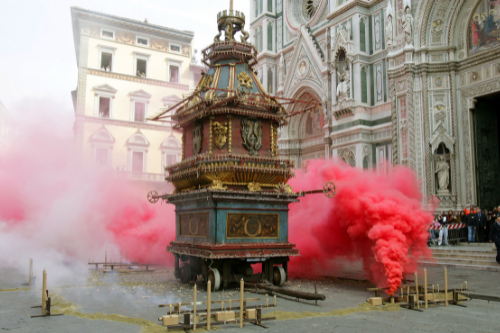
Most holidays are well-spent if they are spent in the loving warmth of family. Therefore, with Easter just a little more than a month away, we are bringing to you some of the most amazing Easter traditions from around Europe to enjoy with your loved ones.So read on and get ready to have a delightful Easter 2023 in Europe!  Italian Easter traditions: Fireworks, processions and personalised Easter eggs If you find yourself holidaying in the Tuscan region, then don’t miss a chance to visit Florence and see ‘The explosion of the cart’ at the Duomo. In this famous Easter tradition, called Scoppio del Carro in Italian, a turret called Brindellone is put on a cart. The cart is then pulled by white oxen through the entire city. Once the cart reaches the Duomo, a pyrotechnic dove is let off from the altar, which lights the turret on the cart, leading to a burst – if the dove comes back safely, it symbolizes a year of prosperity! The Explosion of the Cart in Florence, with Brindellone on top Another famous tradition known all over the world and celebrated in Sulmona, Abruzzo,  is the Easter Meeting, better known as La Madonna che scappa in Piazza. In this tradition, the statue of the Madonna is raced to that of the risen Christ in an emotional meeting of the mother and the son – an unmissable spectacle for those celebrating Easter in Italy!  In Sicily, you will be able to see several suggestive parades: the Real Maestranza in Caltanissetta, a historical association of craftsmen united in a town association that plays a prominent role during the religious festivals; the Processione dei Misteri in Trapani, which is a parade of sculptures representing biblical scenes; and the celebrations in Prizzi and Adrano, some fun eighteenth-century traditions mixing the sacred with the profane.The Processione dei Misteri di Trapani, Sicily Tip: Prolong your stay in Sicily and enjoy a tour around its ‘lost-in-time' baroque towns and gorgeous beaches. What are waiting for? Book one of our holiday homes in Italy Spanish Easter traditions: Death Dances and Parades Death Dances may seem a little spooky at first, but in Verges (Girona), this Easter tradition is participated in by both adults and children. The main spectacle called The Procession of Verges takes place on Maundy Thursday or Holy Thursday, whereas the one with children happens on Easter day. On both days, the Dance of Death is re-enacted the same way: with skeleton costumes, ash boxes, the theatrical depiction of Christs’ passion, and the perfect background setting of the medieval old town centre of Verges! The spooky Dance of Death in Verges Easter in Spain is also celebrated with a number of grand processions. These parades happen in almost every city and town but the most famous of them all are the parades of Seville. In Seville, people dress up as traditional characters known as costaleros and nazarenos in the parades that bring together a crowd of anywhere close to 50,000 people!A “pasos" carried by the Costaleros during the Holy week in Seville Enjoy these amazing events close to Costa del Sol. Book your holiday homes in Spain! French Easter traditions: Spring Easter and Egg Hunts With flowers blooming and the Spring weather at its best, Egg Hunting has to be that one perfect tradition that you can enjoy in almost every part of France with your family.Egg hunts and wholesome family fun, a common Easter tradition in France Egg hunting has the most interesting backstory in France, wherein instead of an Easter bunny, the eggs are thought to be hidden by flying bells! According to general belief, when the bells of all churches are silenced in the three days leading up to Easter, they are thought to fly off to the Pope in Rome for blessing. So when the bells return, they bring back Easter eggs with them and hide them in the garden of houses leading to the tradition of numerous egg hunts throughout France! Do you want to take part to one of these fun egg hunts? Book your holiday home in France and get ready, set and go when les cloches sont passées! (the bells have come!)Enjoy the cosy spring weather in Chamonix in our lovely chalet Tré La Vieux (Property ID: 3287)Croatian Easter Traditions: Easter feasts and traditional dances In Dalmatia, people wear traditional costumes, sing ancient hymns and dance together around a fire to celebrate Easter: one of these typical dances is called Kolo (circle dance), a unique performance that brings people together! Another popular Easter tradition is gifting painted easter eggs (pisanice) to your family and close ones as a symbol of life. Painted Easter eggs gifted by Croatians to their loved ones But no celebration is complete without food. As part of its delectable Easter feast, Croatia serves up on its Easter menu: coloured eggs, spring onions, horseradish, French salads, traditional cakes, and special homemade bread and ham!  But, you can keep feasting in Croatia any time of the year. To get a taste, read our tempting blog on typical Croatian dishes or scroll down a little as we leave you with a virtual taste of the sumptuous Gibanica - a crisp layered pastry with poppy, walnuts, cheese, and carob. Deliciously layered Croatian Easter dessert, Gibanica Taste the delicious Croatian food and enjoy the sunny spring weather. Book your holiday home! Greek Easter traditions: Smashing Pottery and red Easter Eggs Easter in Greece is usually celebrated one week later than the rest of Europe as it follows the orthodox Julian Calendar. But like the rest of the countries, Greece brings in the joy of Easter with its unique traditions. On Corfu, festive time attracts thousands of Greek as well as international spectators to witness the tradition of smashing pottery.Smashed pottery in the street of Corfu A tradition to bring in new hope, smashing pottery in Corfu probably has Italian origins. But on the island, even though the custom was adapted for Easter celebrations, people do not share the same belief of the “smash” bringing in the new year as the Italians do.  So stay off the streets or join in the fun on Holy Saturday as people start throwing red-painted pottery from their balconies at noon and the spectators pick up its pieces as a good luck charm! Tip: Don’t forget to try the ‘red eggs’, painted with organic red ink to depict the blood of Christ. The famous Easter red eggs typical of Greece and the Balkan regionsEnjoy the warm spring and Easter in Greece! Book one of our holiday homes. Swiss Easter traditions: Easter tree and egg smashing The home of chocolate has various traditions surrounding Easter and eggs, but not necessarily chocolate eggs.  From common activities such as egg hunting and decorating Easter eggs to other exquisitely Swiss activities common in almost every canton, Easter in Switzerland is pure family fun.  The lovely Easter Tree, a Swiss tradition that will make children happy Among the most interesting traditions is the Easter Tree, which symbolises the arrival of spring. The tree is made using cut sprigs decorated with coloured eggs. Two other fun activities for adults and children are Eiertutschen and Zwanzgerle. Eiertutschen means 'Egg smash' and consists of breaking the opponent's egg without breaking one's own, the winner will eat the egg. Zwanzgerle is played on Easter Monday: it is usually the adults who try to break their children's egg using a coin. If the adult fails, the child wins the coin! Tip: Try Osterfladen, traditional Easter rice tarts resembling the French Gâteau de Pâques (French), to complete your experience of a very Swiss Easter.The mouthwatering Osterfladen, a typical Easter tart made of rice Want to discover more Swiss Easter traditions? Book one of our holiday homes and discover them for yourself. So where are you and your family heading for Easter?

Gravina in Puglia: An Extraordinary Date With History

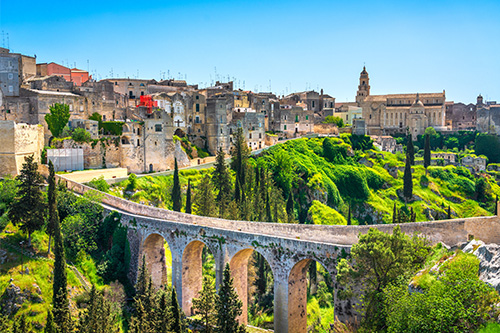
Where nature has given birth to a complex cave system and humans have carved out unique churches in them, Gravina in Puglia is definitely a bucket-list item that you should check on your travels to Southern Italy.Located about an hour’s drive from our lovely retreats in the picturesque seaside town of Monopoli, this ancient town has much to offer and is perfect for a day trip. The town is a rich mixture of natural formations, harmonious architecture, and typical organic produce that you can take back as souvenirs to keep tasting the delicious memories of Apulia. After all, it was not for nothing that Frederick II gave the slogan ‘it offers wheat and wine’ to this Apulian town.A serene view of the Ponte Viadotto in GravinaSo, let’s check out this historic jewel and see what all there is to discover on your day out!The first item on your list should definitely be the extraordinary, San Michele delle Grotte, in the lap of the ravine caves of Apulia. Perched on the slopes of the ravine, the church area has been home to humans since the 7th-C AD and is worth visiting for its spooky atmosphere and the historic relic that, as legend has it, is a stack of skulls and bones of the inhabitants of Gravina massacred in 999 by the Saracens!Commonly known as the Gravina Cathedral, the Basilica Concattedrale di Santa Maria Assunta is a beautiful Romanesque-style building with a rose window decorating its facade. The ancient structure is home to a splendid reliquary and holds within its historical treasures the arm of the English saint, Tomas Becket! Tip: You can also relive history in Apulia at one of the oldest European fairs, the St. George’s Fair (usually on 25th April) that’s happened every year in Gravina since 1294!The Gravina Cathedral with the intricately detailed rose windowAnother historic building that is a must-visit is Sanctuary Madonna delle Grazie. The building’s facade has a spectacular rose window circumscribed by a carved eagle; the coat of arms of the Giustiniani family and the first to ever appear on the face of a religious building. From here you can walk over the ancient Roman bridge called Ponte Viadotto, which is perhaps the most iconic and recognizable symbol of Gravina, and take a breathtaking yet extremely soothing panoramic view of the city from the other side of the river!Finally, you can top the day off by driving down to the magnificent Alta Murgia National Park, where the harmony of history and nature is at its best. Spread over an impressive 668 kilometres, the park is home to the archaeological site of Botromagno that preserves the remains of the Neolithic civilization and is perfect for a few hours of historic trivia and adventure for history buffs! Take a little detour so that you don’t miss out on the most unique and famous castle of Southern Italy; Castel del Monte, which is a stunning octagonal building nestled right in the midst of the scenic landscape of Alta Murgia National Park. Tip: If you are staying longer in Apulia, don’t forget to check out some of its other pearls like Polignano a Mare and the capital of the UNESCO-protected Trulli, Alberobello!What to take home?Since Apulia has an intense food culture, you can take back plenty to keep enjoying even after the trip is over. You can enjoy “Pallone di Gravina”, the village's famous cheese, or one of the DOC wines of Apulia, which come both in sparkling and still variants! So, are you ready to experience one of the most unspoilt parts of Italy, or do you want to make it your next digital-nomad destination?Have a look at our authentic holiday homes in the best destinations of Apulia!

European New Year Traditions that you must try

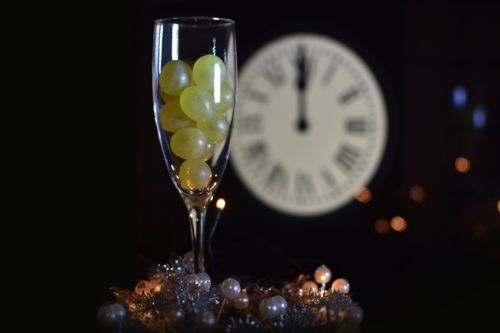
Unique New Year’s traditions from Europe that will be fun additions to your celebrations and double as great party games on your next getaway anywhere! So read on and try something different this New Year! Spanish New Year's Traditions: Gobble them Grapes The twelve grapes of luck The Spanish celebrate the start of the year with Las Doce Uvas de la Suerte or the 12 grapes of luck. According to this tradition, on New Year’s Eve or nochevieja, when the clock strikes 12, you munch on a grape with every toll of the bell to bring in good luck for the rest of the year. But this is not it – to seal in the luck, you must finish eating all the grapes before the final toll! Now there is a fun party game for everyone to enjoy. You can also celebrate this tradition with other food items to increase the challenge. Try it by giving a traditional French twist with a stack of pancakes or a Netherlandish turn by gobbling on anything ring-shaped! Celebrate a very Spanish new year with these amazing holiday retreats in Spain! Italian New Year's Traditions: Tombola and red underwear Will Tombola tell your fortune for the year? A popular new year’s tradition in Italy is to play Tombola, with a chance to win exciting prizes and sometimes even cash money.  In this game, tickets with random numbers from 1-90 are given out to everyone in the party. A host then extracts numbers, again randomly, which the players must cross out one by one. Whoever cuts out all the numbers on their tickets first, wins the prize – certainly an extra motivation to try this tradition. And don’t forget to wear red underwear. Italians think it will bring good luck in the next year! Bring in the new year in Italy with the best holiday homes in the country! Greek New Year's Traditions: Smash and pop pomegranates More seeds mean more luck in Greece! Greece, one of the oldest civilizations on Earth perhaps has the most fascinating new year’s tradition, wherein the Greeks start the year by smashing pomegranates on the ground called Kalo Podariko. And the more seeds jump out of the fruit, the more luck it is supposed to bring you! But we don’t want you to waste precious food in a game, so maybe you can find some innovative idea to try this tradition, perhaps use a piñata full of little coloured balls? Anyway, more sustainable tradition is to gamble all night long! Whether it’s a card game or a dice game, if you win, it’s thought to bring you luck for the year and at the same time you’ve made some extra cash. If you're planning to start a family, hanging onions outside your door, could bring you luck for the next year! Celebrate the traditions in Greece? Find fabulous holiday homes for friends and family! Belgium New Year's Traditions: New Year Messages In Belgium, children continue their letter writing from the Christmas season, only this time it is to the other family members rather than Santa Claus. Children write these letters to wish the elders the season's greetings and tell them that they will be good in the new year. In Belgium, children write Christmas letters to family members But can this be a fun party game? Totally! To turn this solemn tradition into an exciting game, everybody can write messages anonymously for the people present in the party and, at the end, everyone must guess from whom the message is! Who knows you might find your secret admirer? Want to authentically enjoy the traditions? Book your holiday home in Belgium now. Hungarian New Year's Traditions: Telling Fortune inside Dumplings As most of Eastern Europeans, Hungarians can be quite superstitious too! On New Year’s Eve or ‘Szilveszter’ it’s very common to make noises to scare off the evil spirits.  Another fun tradition for girls (and why not for boys too!) is to put pieces of paper with the names of potential fiancées written on them inside 12 dumplings plus an empty one. The first dumpling to rise to the top of the water during cooking is going to contain the name of their future spouse. If it is the empty dumpling, then she is expected to be single for the entire year. Ouch! Are you curious to know who would be your spouse? Live the traditions in the country, book your holiday home in Hungary! French New Year's Traditions: Dress up and Kiss under the mistletoe The French often dress up to celebrate New Year's Eve, and the expression "se mettre sur son 31" reflects this tradition. This expression literally means "dress up like it's December 31st," and it signifies the idea of looking one's best for the occasion. While dressing up isn't mandatory, it's a common practice, and it's a good idea to check with the host or hostess regarding the expected level of formality for the event. The tradition of kissing under the mistletoe on New Year's Eve in France is indeed rooted in history. It's believed to have originated from the Celts, who associated mistletoe with luck and fertility. This tradition has been passed down through the centuries, and it's a charming way for couples to share a special moment as they welcome the new year together. The romantic tradition of kissing under the mistletoe Other customaries are sending New Year’s wishes by greetings cards and giving etrennes, a traditional tip given to the maid, concierge, gardener who take care of their houses, etc. Say Bonjour to the new year in France! Book your holiday getaway now! Read about how other countries celebrate Christmas and New Year! We wish you luck for the new year and for the games!

Alassio: a pearl of Liguria

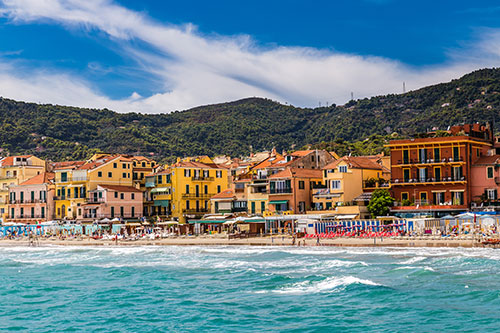
One of the most popular towns during the summer vacations in beautiful Liguria is Alassio — a tourist resort with natural beauty, tourist attractions, and a spectacular sea. The Alassio beaches with their fine sand are unique and reminiscent of the Adriatic coast. In fact, unlike many other Ligurian destinations, here, the sea water level lowers gradually and not suddenly. But what else can you see besides enjoying the sun on Alassio beaches? Keep reading and you will know!One of the most famous attractions in Alassio is the Muretto di Alassio, in 2007, led to its recognition as the "city of lovers”. Created in 1953 from the idea of two artists; Mario Berrino, a Ligurian painter, and the famous novelist Ernest Hemingway, this wall is adorned with colourful ceramic tiles and the signatures of many famous people.The story of its conception is quite interesting, too. At the time, Berrino was the owner of a bar called Caffè Roma located just in front of the wall, while the English writer was in Liguria to admire the beauty of which he had often heard about. During this time, the two met in the artist's bar and decided to create this well-known muretto. It is also curious how this attraction gave name to the beauty contest — Miss Muretto — that has seen many stars of show business become famous in Alassio. But after several years, this contest was brought to an end by Berrino’s nephew to restore the true essence of the wall.Editor's tip: Enjoy hiking in Liguria with our latest guide to the 4 best routes that can be covered in 4 hours or less!Muretto di Alassio, a slice of Alassio's history from the 20th CenturyAnother place that deserves to be visited is the Gardens of Villa Della Pergola. Its perfect Anglo-Mediterranean style park adjacent to the ancient villa is 22-thousand square meters in size. Here, you can admire and photograph a wide variety of local plants as well as the ones from different parts of the world.  Undoubtedly appreciated by tourists, is the heart of this town (also one of the best Alassio shopping areas) located on the sea; a mix of ancient remains and modernity of the new buildings, where you can find boutiques, cafes, bistros, and more.Mole leading to AlassioSo, are you thinking of soaking up the beaches and architectural beauty of Alassio? Have a peek at one of our best holiday homes in Alassio and Liguria.

Alberobello: The capital of the Trulli

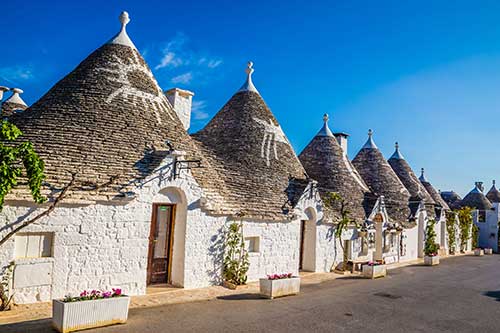
One of the unmissable stops in wonderful Puglia is the "capital" of Trulli in Alberobello. The town owes its worldwide fame to these ancient dwellings, which have been a UNESCO World Heritage Site since 1996.But what is so special about these houses? The answer lies in the past when the landowners forced the peasants who were moving to these areas to build dry dwellings, which were unsafe, though stable. In fact, the trulli are made only of stones, but their round shape and the domed roof made them very resistant, so much so, that they are still quite well-preserved.  Alberobello is a very cosy and welcoming town in Puglia — easily visited in a day, but mostly on foot. So now, let’s see together some points of interest that one should not miss while here!Rione Monti is one of the most characteristic and ancient neighbourhoods. This area is very touristy and preserves more than 1000 trulli; these are just the ones that belong to UNESCO! In addition to admiring the typical stone houses, you can also find several stores where local handicrafts or souvenirs are available. You can even check out the interior of the trulli, with their particular and unique furnishings.  The village Aia Piccola is another very fascinating area of Alberobello. Right here are about 400 trulli — some of these are real, typical hotels — where you can sleep, even just for one night, and have a unique experience. This village, where tourists from all over the world usually stay, owes its name to the act of beating wheat — an ancient activity here. Along with its narrow and characteristic alleys, it is also possible to have a panoramic view of the whole town from the nearby Belvedere di Santa Lucia. Several legends hover around the windowless Siamese trulli, characterised by a stepped structure in rock. They have a very interesting particularity: from the outside, they appear like a single house, but in reality, they are two trulli in one, in fact, they have a double dome. There is a double entrance and, internally, they are two trulli separated from each other and connected by a very old door. Alberobello has very much to offer besides its typical buildings. For those who want to know the traditional products of the area, Museo dell’Olio (Oil Museum) is dedicated to one of the raw materials par excellence of this territory! Also, a stop at a restaurant-Trullo will certainly serve as a unique experience to taste the regional cuisine!

Carrara: The City of Marble

Since ancient times, Carrara — a Tuscan town in the hinterland of Versilia —  has been a world-famous city, known especially for its marble. In fact, there are many quarries here, where every day, huge blocks of fine marble are extracted to be used all over the world. Not only this, the great artist and sculptor Michelangelo used this very marble of Carrara to give life to his works.  Carrara is located just a few kilometres from the coast of Versilia and hides in its various corners, precious sculptures and buildings made of marble. Even the City Cathedral’s facade is made of marble! It is, after all, the most-used material for construction in Carrara.  For those who stay in Versilia, for example in places like Forte Dei Marmi, only a small stretch of road (about 30 minutes) needs to be traversed to reach the destination with the Apuan Alps, as protagonists, visible even from the sea. A setting quite unique in itself! However, the main attractions not to be missed while strolling through the city are; Piazza Alberica, with its various marble pavements contrasting with the majestic and colourful buildings, and the square fountain with a statue reminiscent of Duchess Maria Beatrice D'Este in its centre. Continuing along the streets of the centre, one also comes across the precious Cathedral of Sant'Andrea, whose facade is made of white Carrara marble and black marble from a nearby village called Colonnata. Right in the centre of the facade, is the rose window with a semblance of a wheel, the symbol of this city. In fact, the name "Carrara" derives from the name “wagons”, which were once used to transport the blocks of marble.  Also worthy of a visit is the fountain in Piazza d'Armi created by the artist Kenneth Davis. Its peculiarity is the rotating sphere (very impressive and heavy) in marble that moves using just the force of water! The Teatro Degli Animosi, whose facade is also made of white marble, deserves to be admired too.  In every corner, the city of Carrara hides buildings, squares, and marble sculptures. Therefore, it would not be wrong to say that being in Carrara is like being in a sculptors' live workshop. For those who love art, and the link between this city and the great artist Michelangelo, we recommend a visit to Carrara and the Michelangelo Museum in Villa Fabbricotti, located not far from the centre.  In order to enter the life of the city’s atmosphere, it is necessary to go up along the roads that bring one closer to the quarries. These roads are navigable and require minimum effort, but the panorama is really suggestive of the entire atmosphere. In the blink of an eye, you pass from the city to a unique scenery, where wherever you look, you find the white of the marble blocks and quarries. Along the way, you will also come across the ancient Ponti di Vara (bridges) built to let the old Ferrovia Marmifera (marmifera railway), that transported the large blocks, pass. At the end of the route, you will reach the famous Fantiscritti quarries, appreciated by tourists for their scenic environment, and also the Museo Delle Cave (quarry museum), symbolic of the history of marble and how it was transported.  Every summer in Fantiscritti, the unmissable event where experts reenact the ancient art of transporting blocks of marble using ropes, a special moment of recalling history for tourists, is held. For those who want to see the marble quarries up close, there are guided tours with maximum safety. You can go inside the quarries and then reach the top, located at an altitude of 1000 metres. From here you will see a breathtaking view of Versilia till the Cinque Terre. Along the route, there is also the village of Colonnata with its several quarries. It is an ancient village with small alleys and souvenir stores. Colonnata is especially famous for the production of its renowned lard, a local delicacy IGP. Here, you can stop for a tasty snack and visit the village as well. Many other stores selling marble objects are located along the road that you take to get to the quarries, so why not take home a souvenir for yourself on your way back? Going down and returning to the valley, you will also find another village by the name of Torano. Torano, too is an ancient village, but it has marble quarries as the backdrop of its houses. Hereagain, every summer, a festival that lasts for about 2 weeks takes place. It is a festival where between the dances, shows, and good food, you can also admire the many marble statues and works by various artists.  So, when in Carrara, get lost in the streets of the village to find its various hidden treasures and if you are staying in Versilia, then this is a destination not to be missed. Everything, from the city of Carrara to the marble quarries and its villages, has a timeless charm. Discover our holiday homes in Tuscany!

Siena in a day: 5 attractions you can’t miss!

If you're near beautiful Versilia, you can't miss a stop in Siena, a historical city in the heart of Tuscany.  The city is rich in architecture, art, history and ancient traditions that have been handed down from generation to generation, such as the famous Palio di Siena and the contrade that characterize this town.   In this blog post, we will talk about 5 attractions that can be covered in a day in Siena. The most famous square in the city, Piazza del Campo is located in the heart of Siena. From this square to the Duomo you will find the most famous attractions that make Siena a unique destination worldwide. The brick colour of the terracotta floor of the square, together with the colour of the buildings create a warm and welcoming atmosphere.  Palio di Siena is an event that is held twice every year at this square and is especially close to the hearts of the citizens of Siena. There are also several palaces worth admiring, especially the Palazzo Comunale. The beautifully decorated fountain called Fonte Gaia with Carrara marble faithfully reproduces the original fountain (now kept in the museum of Santa Maria della Scala) is an extraordinary structure. Also, in the center and close to the Duomo is the Santa Maria della Scala complex. This building was once a hospital for pilgrims- a warm place for the poorest people and for abandoned children. Today, the building houses various works of art. Spread over four levels, this 'miniature city' is worth visiting if you have ample time. In the center of the same area, is Piazza del Duomo. Here, you can admire several attractions that can not be missed: the Duomo, the Crypt, the Piccolomini Library, the Baptistery and the Museum of the Opera del Duomo. That's why tourists who want to enjoy all these beauties are always advised to buy a pass that will save them a lot of money.  The Duomo, or rather the Cathedral of Santa Maria Assunta, strikes you with its beauty right from the outside with its Romanesque-Gothic style and use of white marble. The interior is also worth discovering- white and dark green marble is the representative materials and colours here. It will not be difficult to come across works by Michelangelo, Donatello; Pinturicchio and other famous artists here. The floor of the Cathedral of Siena is an artistic gem. It consists of 56 carved marble panels depicting different scenes. You will definitely be amazed! There are also several works of art and statues as well as a magnificent view from the roof.  On a trip to Siena, the Torre del Mangia is also in the top 5 attractions. The city's civic tower is 87 metres high and offers the most impressive view of Siena and its surroundings. After climbing up 400 steep and narrow steps, you will reach the top and your effort is rewarded by the spectacular view.Siena is a town full of history, traditions and unique beauty. If you are staying in Tuscany, make sure to visit this beautiful town. Discover our holiday homes in Versilia!

5 characteristic villages on Lake Como

Want to spend a few days of pure relaxation? Lake Como is an ideal destination for young and old who want to have a peaceful vacation. In addition to the magnificent lake and the mountains of Lake Como, you will also find good food, various water activities and more. The villages on the shores have myriad different things to offer and are waiting to be explored.  Let's go see 5 of them together!BellagioFlanked between the two branches of the lake, Bellagio, a small jewel on Lake Como waiting to discovered, is popular among tourists for its unique location. The alleys of the town offer unmissable views as well as typical restaurants and bars that will amaze you. What else should be on your itinerary beside the village? Certainly the gardens of Villa Melzi and Villa Serbelloni. The gardens of Villa Melzi especially, together with a museum and a chapel, are usually visited by all the tourists who come to Bellagio. Lush azaleas, rhododendrons and a romantic Japanese lake with water lilies and trees such as cedars and maples around make for a perfect outing.  Planning something romantic for your sweetheart? Impress them with a ferry ride from Bellagio to Como.ColicoThis village, which is located in the eastern part of Lake Como, offers a verdant mix of natural beauty and opportunity for relaxation. Colico is easily reachable for even those staying in the western part of Lake Como, for example in Domaso or Gravedona. Here, you can engage in activities such as trekking through the pleasant nature trails. In fact, many of these nature trails can also be enjoyed on a nice bike ride. Obviously, the village’s main attraction remains the lido where you can eat at the restaurants, sunbathe or even learn kitesurfing with experts. Close to the village of Colico is the hamlet of Olgiasca where you can stop by at the Abbey of Piona, a Cistercian abbey where absolute peace and serenity reigns. The essence of the abbey is best captured by the word "silentium",  which is also written at the beginning of the pedestrian street that leads to the abbey. Once you have arrived, you can admire the Church and the adjoining cloister which is built in Lombard Romanesque style. The spectacular views of the lake and the mountains and the local products such as liqueurs and digestives that are produced by the monks here make it an unmissable stop. OssuccioFor architecture lovers, this village is a must-visit on your trip to Como. Its eight churches, located in the various hamlets of the village, certainly make it a religious meeting point. Each of these churches has its own unique features and a wonderful lake view to offer.
If you want to fully breathe in the sacred atmosphere of Ossuccio, you cannot miss a visit to the Sacred Mount and the Sanctuary of the Blessed Virgin. It is a UNESCO World Heritage Site consisting of 14 chapels which lead up to the top where there is the Sanctuary.For those who love adventure,  a stop at Isola Comacina is highly recommended. It can be reached by ferry from Ossuccio and the surrounding villages. Archaeological finds, uncontaminated nature and even beaches to swim during the summer, these are only some of the things that the village has to offer to its visitors. BrunateThis small village can be easily reached from the historical center of Como through the famous funicular. Upon your arrival at the top, be prepared to be enchanted by the breathtaking views. Your first stop should certainly be the Faro Voltiano, dedicated to Alessandro Volta, a famous citizen who invented the electric battery. You can climb to the top of the lighthouse, which is at a height of 29 meters and enjoy a unique spectacle. There are also several other activities that you can choose from. There are panoramic footpaths where you can observe Art Nouveau villas or other paths ideal for trekking enthusiasts. In fact, from Brunate there are several paths that lead to different peaks of the Como area.  TremezzoLocated in the so-called "tremezzina", this village has a unique charm. Nature and architecture blend perfectly in this lake village. It is a must-visit during your vacation in Lake Como. A number of villas are located near the center, the most famous among them being Villa Carlotta. The villa has always been a popular destination among tourists not only for the beauty of its botanical garden which is a medley of colors, scents and wonders but also for the museum where there are important works of art. Do not forget that Villa Carlotta offers educational trails and is also open to private events such as weddings. All the villages of Lake Como are undoubtedly worth visiting for the different offerings that make them unique. In this blog post, we have only mentioned five of them that promise different activities and unique experiences. The common element among all these villages is certainly the charm of the lake.Discover our vacation homes on the beautiful Lake Como! 

Als Filter anzeigen:
×

Unser Newsletter

Exklusive Angebote für die begehrtesten Urlaube, direkt in Ihren Posteingang!

Vielen Dank für Ihr Abonnement!
Wir halten Sie mit unseren neuesten Reisetipps und exklusiven Angeboten auf dem Laufenden.