Voeding en restaurants Reisblogs in Kroatië

Elk verblijf voelt als thuis

Plan je volgende avontuur met deskundige reisgidsen, routes en must-see bestemmingen in heel Europa!

European Easter Traditions Worth Planning a Family Holiday!

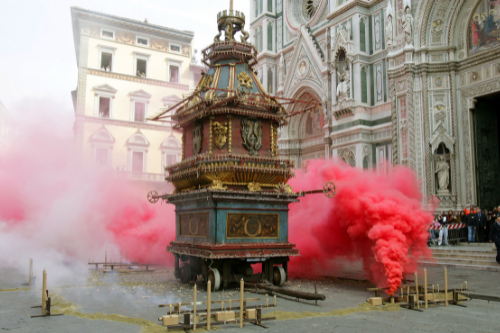
Most holidays are well-spent if they are spent in the loving warmth of family. Therefore, with Easter just a little more than a month away, we are bringing to you some of the most amazing Easter traditions from around Europe to enjoy with your loved ones.So read on and get ready to have a delightful Easter 2023 in Europe!  Italian Easter traditions: Fireworks, processions and personalised Easter eggs If you find yourself holidaying in the Tuscan region, then don’t miss a chance to visit Florence and see ‘The explosion of the cart’ at the Duomo. In this famous Easter tradition, called Scoppio del Carro in Italian, a turret called Brindellone is put on a cart. The cart is then pulled by white oxen through the entire city. Once the cart reaches the Duomo, a pyrotechnic dove is let off from the altar, which lights the turret on the cart, leading to a burst – if the dove comes back safely, it symbolizes a year of prosperity! The Explosion of the Cart in Florence, with Brindellone on top Another famous tradition known all over the world and celebrated in Sulmona, Abruzzo,  is the Easter Meeting, better known as La Madonna che scappa in Piazza. In this tradition, the statue of the Madonna is raced to that of the risen Christ in an emotional meeting of the mother and the son – an unmissable spectacle for those celebrating Easter in Italy!  In Sicily, you will be able to see several suggestive parades: the Real Maestranza in Caltanissetta, a historical association of craftsmen united in a town association that plays a prominent role during the religious festivals; the Processione dei Misteri in Trapani, which is a parade of sculptures representing biblical scenes; and the celebrations in Prizzi and Adrano, some fun eighteenth-century traditions mixing the sacred with the profane.The Processione dei Misteri di Trapani, Sicily Tip: Prolong your stay in Sicily and enjoy a tour around its ‘lost-in-time' baroque towns and gorgeous beaches. What are waiting for? Book one of our holiday homes in Italy Spanish Easter traditions: Death Dances and Parades Death Dances may seem a little spooky at first, but in Verges (Girona), this Easter tradition is participated in by both adults and children. The main spectacle called The Procession of Verges takes place on Maundy Thursday or Holy Thursday, whereas the one with children happens on Easter day. On both days, the Dance of Death is re-enacted the same way: with skeleton costumes, ash boxes, the theatrical depiction of Christs’ passion, and the perfect background setting of the medieval old town centre of Verges! The spooky Dance of Death in Verges Easter in Spain is also celebrated with a number of grand processions. These parades happen in almost every city and town but the most famous of them all are the parades of Seville. In Seville, people dress up as traditional characters known as costaleros and nazarenos in the parades that bring together a crowd of anywhere close to 50,000 people!A “pasos" carried by the Costaleros during the Holy week in Seville Enjoy these amazing events close to Costa del Sol. Book your holiday homes in Spain! French Easter traditions: Spring Easter and Egg Hunts With flowers blooming and the Spring weather at its best, Egg Hunting has to be that one perfect tradition that you can enjoy in almost every part of France with your family.Egg hunts and wholesome family fun, a common Easter tradition in France Egg hunting has the most interesting backstory in France, wherein instead of an Easter bunny, the eggs are thought to be hidden by flying bells! According to general belief, when the bells of all churches are silenced in the three days leading up to Easter, they are thought to fly off to the Pope in Rome for blessing. So when the bells return, they bring back Easter eggs with them and hide them in the garden of houses leading to the tradition of numerous egg hunts throughout France! Do you want to take part to one of these fun egg hunts? Book your holiday home in France and get ready, set and go when les cloches sont passées! (the bells have come!)Enjoy the cosy spring weather in Chamonix in our lovely chalet Tré La Vieux (Property ID: 3287)Croatian Easter Traditions: Easter feasts and traditional dances In Dalmatia, people wear traditional costumes, sing ancient hymns and dance together around a fire to celebrate Easter: one of these typical dances is called Kolo (circle dance), a unique performance that brings people together! Another popular Easter tradition is gifting painted easter eggs (pisanice) to your family and close ones as a symbol of life. Painted Easter eggs gifted by Croatians to their loved ones But no celebration is complete without food. As part of its delectable Easter feast, Croatia serves up on its Easter menu: coloured eggs, spring onions, horseradish, French salads, traditional cakes, and special homemade bread and ham!  But, you can keep feasting in Croatia any time of the year. To get a taste, read our tempting blog on typical Croatian dishes or scroll down a little as we leave you with a virtual taste of the sumptuous Gibanica - a crisp layered pastry with poppy, walnuts, cheese, and carob. Deliciously layered Croatian Easter dessert, Gibanica Taste the delicious Croatian food and enjoy the sunny spring weather. Book your holiday home! Greek Easter traditions: Smashing Pottery and red Easter Eggs Easter in Greece is usually celebrated one week later than the rest of Europe as it follows the orthodox Julian Calendar. But like the rest of the countries, Greece brings in the joy of Easter with its unique traditions. On Corfu, festive time attracts thousands of Greek as well as international spectators to witness the tradition of smashing pottery.Smashed pottery in the street of Corfu A tradition to bring in new hope, smashing pottery in Corfu probably has Italian origins. But on the island, even though the custom was adapted for Easter celebrations, people do not share the same belief of the “smash” bringing in the new year as the Italians do.  So stay off the streets or join in the fun on Holy Saturday as people start throwing red-painted pottery from their balconies at noon and the spectators pick up its pieces as a good luck charm! Tip: Don’t forget to try the ‘red eggs’, painted with organic red ink to depict the blood of Christ. The famous Easter red eggs typical of Greece and the Balkan regionsEnjoy the warm spring and Easter in Greece! Book one of our holiday homes. Swiss Easter traditions: Easter tree and egg smashing The home of chocolate has various traditions surrounding Easter and eggs, but not necessarily chocolate eggs.  From common activities such as egg hunting and decorating Easter eggs to other exquisitely Swiss activities common in almost every canton, Easter in Switzerland is pure family fun.  The lovely Easter Tree, a Swiss tradition that will make children happy Among the most interesting traditions is the Easter Tree, which symbolises the arrival of spring. The tree is made using cut sprigs decorated with coloured eggs. Two other fun activities for adults and children are Eiertutschen and Zwanzgerle. Eiertutschen means 'Egg smash' and consists of breaking the opponent's egg without breaking one's own, the winner will eat the egg. Zwanzgerle is played on Easter Monday: it is usually the adults who try to break their children's egg using a coin. If the adult fails, the child wins the coin! Tip: Try Osterfladen, traditional Easter rice tarts resembling the French Gâteau de Pâques (French), to complete your experience of a very Swiss Easter.The mouthwatering Osterfladen, a typical Easter tart made of rice Want to discover more Swiss Easter traditions? Book one of our holiday homes and discover them for yourself. So where are you and your family heading for Easter?

Must-try typical Croatian dishes

A land of a thousand surprises, Croatia is a combination of, breathtaking landscapes, wild nature and crystal clear waters. But don't overlook its unique cuisine either, as there are several local dishes that are well worth sampling.  Croatian cuisine is typical and traditional, yet cosmopolitan. It is influenced by the past, but also by introductions from outside the territory. The dishes are both meat and fish-based and cooked in a variety of special ways. Thus, land and sea come together to create delicious food in the traditionally rich land of Croatia. So, let's discover these must-try Croatian delicacies that you should definitely eat on your next trip to Croatia! Peka Let's start with a very popular second course: Peka, a Croatian meat dish.   Peka is the name of the terracotta or cast-iron bell covered with glowing embers that are used to cook various meat such as lamb, veal, chicken and even octopus. The peka, in turn, keeps the flavours intact and makes the food very tender. What is even more interesting is that some houses in Dalmatia have a space dedicated to cooking this dish, especially in small villages! Lamb and potatoes cooked with Peka, a hearty Croatian dish Ćevapčići and Pljeskavica For those who love street food, we recommend Ćevapčići - small, elongated meatballs made of spiced mixed meat (usually beef and lamb). Although Ćevapčići originated in Bosnia, it is not difficult to taste them whether you are on the streets of Croatia or in restaurants. Meatballs are served with paprika, fresh onion and a spicy sauce called ajvar, made from pepper. The meat is cooked on the grill, griddle or BBQ.  Ćevapčići, typical Croatian street food, usually eaten with ajvar, a spicy sauce Very similar to Ćevapčići, Pljeskavica is another typical croatian food: a delicious patty of minced meat (beef and lamb), it’s served with ajvar and chopped raw onion and even with lepinja flatbread and a side of chips. A must try for every street food aficionado! Pašticada Another typical croatian food a Dalmatian dish Pašticada, which is considered suitable for special occasions, perhaps because of its long and laborious preparation. This is a stew of meat, usually beef, which is soaked in vinegar and then cooked in a red wine sauce. A rich dish accompanied by the typical Croatian njoki (gnocchi). To give it even more flavour, dried fruit (plums or figs) and various spices such as bay leaves, nutmeg and cloves are usually added.Pasticada, an elaborate meal for special occasions Crni Rizot or Black Risotto A typical first course in Croatian cuisine is Crni Rizot, which is also one of the trademark Croatian fish dish of Dalmatia. In this land, risotto is the base for many dishes, and there are many variations, but crni rizot is the one that has gained popularity all over the world. This risotto is easily recognisable by its black colour given by the ink of the squid or of a cattlefish, making a dish of simple and rooted tradition, now extremely refined and delicious. Crni rizot or black risotto topped with parsley and cheeseTip: If you are crazy about pasta, you need to try the Croatian pasta, especially Fuži and Pljukanci. Fuži is homemade fresh a quill-shaped pasta often served with a truffle cream sauce or red meat sauces including beef, boškarin, chicken, rooster or wild game. The fresh, chewy, hand-rolled spindle-shaped pasta, pljukanci, are also very much enjoyed. Brudet Another seafood delicacy is Brudet or fish stew. It is found in many parts of the world and has a lot of variations. In Croatia, it is especially popular as a soup with mussels, langoustines and monkfish, with the addition of onions or using tomato as a base. In some areas, it is cooked with lobster, eel or frog, so there is something for everyone! Delicious Croatian fish stew, Brudet Fiš Paprikaš Another kind of fish stew is the tasty fiš paprikaš, which is cooked in a caldron over an open fire and seasoned with paprika. Common ingredients are freshwater fish like catfish, carp, and pike. In some Croatian regions it’s served with egg noodles. A real gastronomy experience! The delicious winter comfort food, Fiš Paprikaš Salata od hobotniceSalata od hobotnice or octopus salad is eaten during summer since there is an abundance of fresh octopus. The octopus is boiled until it’s tender, then once cold, is chopped and mixed with onions, capers, parsley. Someone likes to add also tomatoes and/or boiled patatoes. At the end everything is tossed in a dressing made of olive oil (Istrian olive oil is one of the best) vinegar or lemon, salt, pepper and garlic. A perfect dish for summer dinners! In summer, try the delicious Salata od Hobotnice Special mentions: Boškarin, Pršut and Kulen Also known as the Istrian ox, the Boškarin is considered a gourment delicacy and a traditional Croatian food served in a variety of ways such as carpaccio, salami, steak etc. A common appetizer, usually served with cheese (pršut i sir), is the Istrian ham or Pršut. Made of a skinned pork leg, dry-salted with sea salt and seasoned with pepper and garlic and then air cured for at least 12 month with the northen wind of the Bura that give it its unmistakable aroma. Among the must-try Croatian dishes, Kulen is typical of Slavonia, a Croatian eastern region, it’s a tasty smoked pork sausage seasoned with paprika and garlic. A real national treasure! Spicy kulen, the must-try Croatian salamiWait, did we finish without a Croatian dessert?  Medimurska Gibanica Well, in that case, try the visually stunning Medimurska Gibanica. This four-layered pastry with apples, walnuts, cottage cheese and poppy seeds packs in it a whole bunch of flavours that will definitely sum up Croatian desserts! Medimurska Gibanica, a typical croatian dessert Fritule Very popular during the holidays, fritule are made with fried dough which can be flavoured with egg yolks, raisins, grated lemon or orange rinds, and even rakija or rum. A must try for sure! Fragrant fritule, a delightfully airy Croatian dessert And what about the drinks? Croatia is also well known for wines, some of the most famous wines are Istria’s Malvazija and Teran. Malvazija is a light white that pairs well with fish and seafood dishes while Teran is a roboust red wine ideal for meat dishes. But what to drink after an earthy meal? Rakja is the answer! This distilled spirit, who comes in several flavours, is symbol of hospitality and locals drink it before and after meals. Charcuterie and cheese board accompanied by Croatian wine Croatian cheese In Croatia, cheese is usually served as a starter or as a dessert. From the Pag island comes the famous Paški Sir (Pag cheese). This sheep’s cheese has a similar texture to Parmesan’s and is a staple of Croatian cusine!  A real symbol of Croatian food, the delicious Paški sir From the leftover whey after the production of the Paški sir, is made Paška skuta, a fresh and soft ricotta cheese with a mild flavour usually served with fresh fruit or used in desserts. Another typical cheese is Škripavac, a soft gummy cow-milk cheese that you can eat on its own or grilled.   A cuisine of simple and rich traditions is often adapted in a more elaborate way to make up modern Croatian cuisine. So, if you are staying in Croatia, you must try these delicacies!  Looking for a suitable holiday home to accompany your Croatian food tour? Book with us! Read more Zadar: the Croatian city that will surprise you with its art and culture Šibenik: the seaside city of UNESCO-protected history  Plitvice Lakes: visiting a Croatian winter wonderland Digital Nomads in Croatia: a full guide for first-time digital nomads in Croatia 

Weergeven als filter:
×

Onze nieuwsbrief

Exclusieve aanbiedingen voor de meest gewilde vakanties, rechtstreeks in uw inbox!

BEDANKT VOOR JE INSCHRIJVING!
We houden je op de hoogte met onze laatste reistips en speciale aanbiedingen.